Photo from The White House
As the 2026 FIFA World Cup comes to an end, soccer fans across the globe reflect on the last few weeks of intense action and memorable moments. For the U.S national team, despite dropping out in the round of 16, they captured attention and support from the entire country. However, this was not without some controversy.
On July 5, FIFA, the organization that governs international football, announced it had overturned, or reversed, the decision to suspend Folarin Balogun, a star player on the U.S men’s national team.
In soccer, players are subject to a regulatory system consisting of yellow and red cards, which can be used in response to a variety of unsportsmanlike behavior. Yellow cards are warnings before red cards, while red cards result in ejection from games. In the World Cup, red cards also include a one-match suspension, meaning that if a player receives a red card, they won’t be able to play in the next match.

Photo by Hossein Zohrevand from Tasmanian News Agency
This is why red cards are generally reserved for extreme behavior such as actions that either put players in danger or deny “clear goal scoring opportunities”.
During his Round of 32 match against Bosnia and Herzegovina, Balogun was awarded a red card in the 68th minute after unintentionally stepping on an opposing player’s leg while fighting for the ball. The decision by the referee was extremely controversial, as many people argued that there wasn’t any intent to injure the opponent behind Balogun’s actions. Balogun himself openly disagreed with the decision and believed that a less harsh yellow card would have been more suitable for the situation.
On the other hand, many people, including former U.S Men’s National Team coach Bruce Arena, agree with the decision of a red card despite the lack of intent, seeing as Balogun’s actions put the opposing player in danger regardless.

Photo by Steve Evans from Citizen of the World
Balogun himself had also scored a goal in that game against Bosnia and Herzegovina, and was seen by many as one of the key players on the U.S team. As a result, the prospect of his absence in the upcoming Round of 16 match against Belgium concerned many U.S supporters.
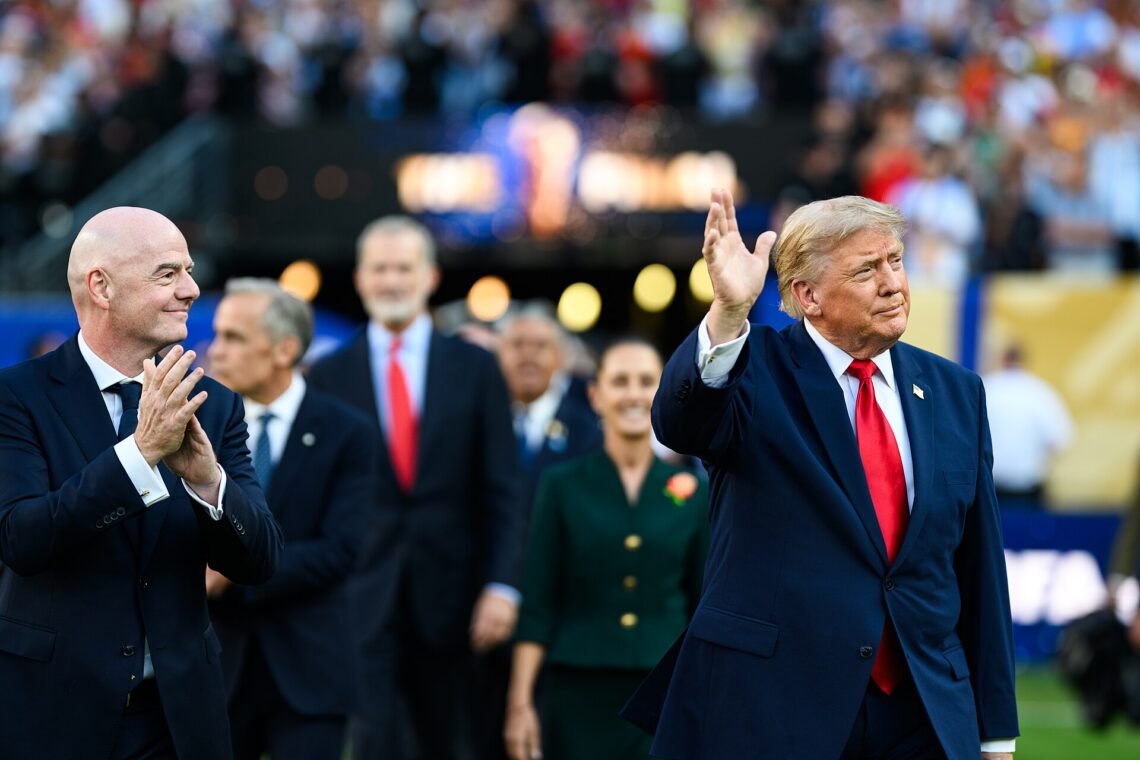
On July 2nd, three days before FIFA announced the reversal of the suspension, President Donald Trump called Gianni Infantino, the President of FIFA, and requested a review of the red card. President Trump and Infantino have had a strong relationship nearly eight years long, which has included frequent visits to the White House.

Despite the result of FIFA’s review, many people criticize Trump’s push for a reversal as unfair and an overstep of political influence, though Trump himself argues that he never explicitly told Infantino what to do.
Balogun himself has also been the subject of political interest. Despite being raised in the UK by British parents, he was born in the U.S while his parents were traveling and granted birthright U.S citizenship. Trump and his allies have pushed for limiting birthright citizenship, including birth tourism, which Balogun’s affiliation with the U.S Men’s National Team is in large part attributed to.