
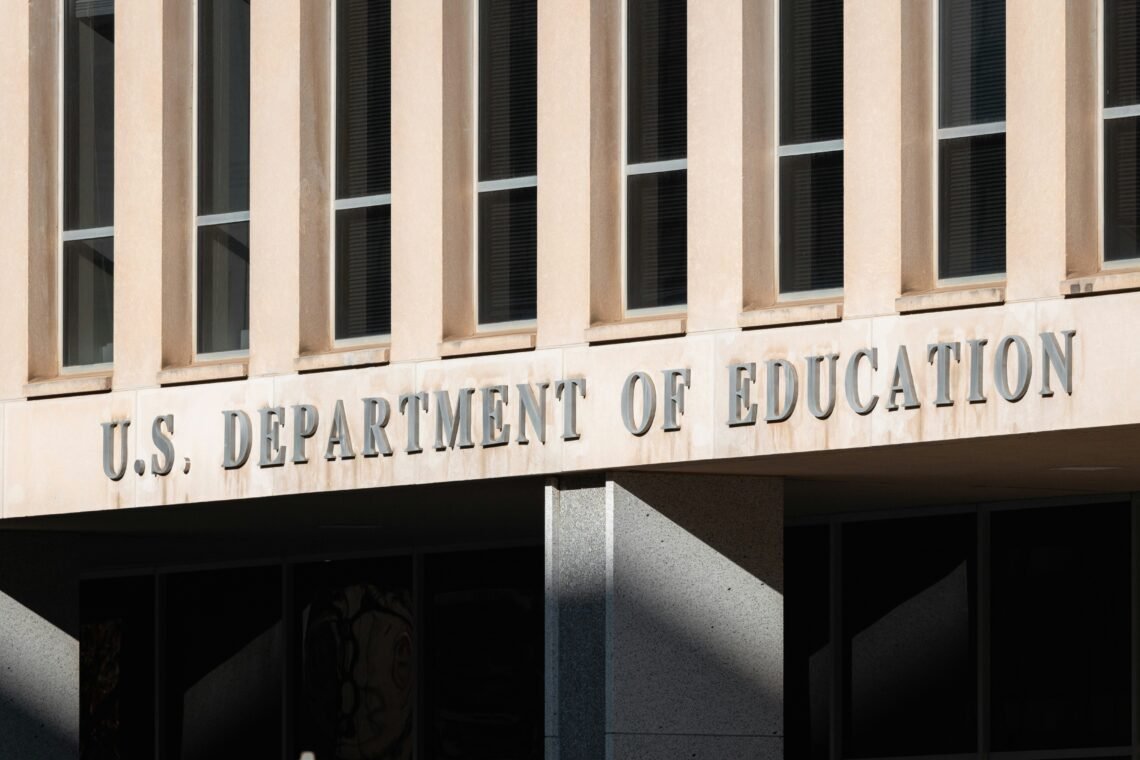
Photo by Andy Feliciotti on Unsplash
When President Trump took office again back in 2024, one of his most prominent goals was to dismantle the U.S. Department of Education. Although he lacks the standalone power to abolish it completely, Trump has taken significant steps to shrink the department. So what has he done, and what does the Department of Education look like now?
First, we have to start from the beginning. The U.S Department of Education was established in 1867 by President Andrew Johnson to “collect information and statistics about the nation’s schools”. However, it didn’t last long before being scaled down to an Office of Education within a separate department, due to fears that the department would have too much power over local schools.

Photo by Harrison Keely from Wikimedia Commons
It wasn’t until 1979 that the U.S reestablished it as a department. At the time, the Soviet Union’s launch of Sputnik and the Space Race led to the expansion of education programs for science in schools, as well as President Lyndon B Johnson’s “War on Poverty,” a campaign that included calling for improved access to quality education for poorer students. Civil Rights movements across the nation also called for improved education for racial minorities, women, and non-English speakers.
Thus, the many different combined efforts in that time period to expand government-funded education led to the passing of the Department of Education Organization Act by Congress in 1979.
The role of the agency is essentially to establish policies and distribute federal money, meaning money belonging to the U.S national government rather than state or local governments, throughout various education programs throughout the country. Among its goals are ensuring access to equal education for all and improving the management of federal education activities,

Photo by Poddar Group of Institutions on Unsplash
Today, around 12.9% of public school funding comes from the federal government, much of which is coordinated through the Department of Education. Generally, public schools are mostly funded by the taxes paid to state and local governments, and the Department of Education targets specific needs.
Supporters of the Department of Education argue that the agency plays a critical role in providing money to programs that protect and ensure quality education for “vulnerable and underserved students”. Many of these people fear that if the Department of Education is dismantled, it will hurt poorer communities and prevent their access to education assistance.
Trump and conservative allies have argued that the Department of Education is largely unnecessary, as state and local governments already primarily pay for public schools, control who is hired, and determine what is taught in them. Trump is critical of its programs and laws that encourage diversity, equity, and inclusion and has labeled the agency as “wasteful”.
After taking office, Trump appointed Linda McMahon as Secretary of Education, which means she was the leader of the Department of Education, in an effort to shrink the agency. Within a year, McMahon fired almost half of the department’s staff, and both cut major programs and moved them to other agencies. Trump also signed an executive order titled “Improving Education Outcomes by Empowering Parents, States, and Communities”, a key measure that ordered the transfer of many of the agency’s responsibilities away.
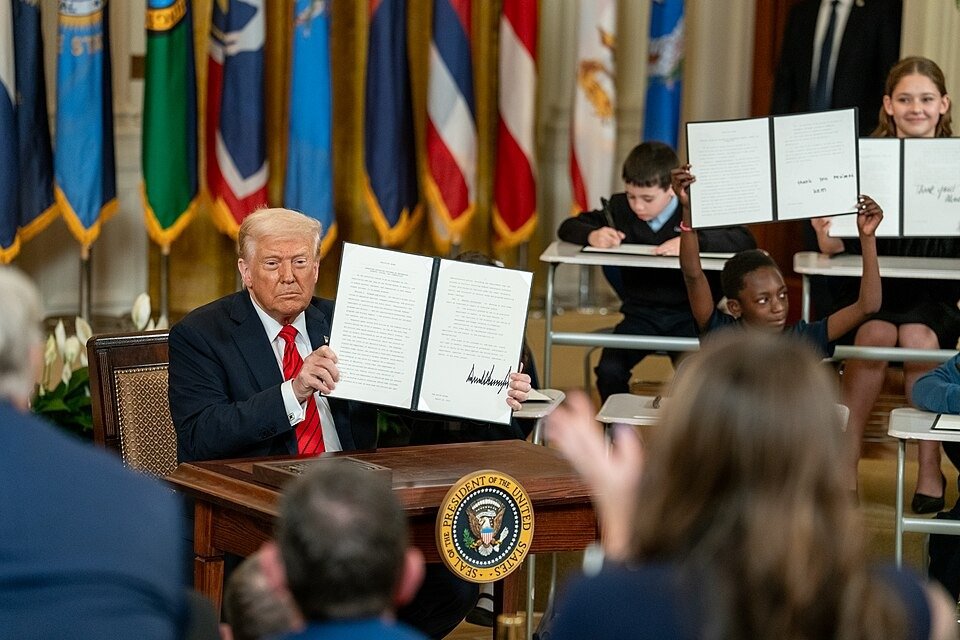
Photo from The White House
While the Department of Education remains intact, it has been severely stripped down over the course of the last year. While there are unlikely to be any noticeable short-term effects, we will see in the future if and how these actions affect equal access and the quality of public education in the U.S.